

September was a great month for me when it came to live music. Getting to see Three Days Grace (twice) and experience Bring Me The Horizon for the first time was cool on its own, but the extreme difference between these two wildly successful bands has been rolling around in my head.
Two Concerts With Two Experiences
I interviewed Three Days Grace for Playboy back in June, so I was pretty pumped to finally see them live with the return of Adam Gontier—while still having the heavier metalcore vocals from Matt Walst.

Bring Me The Horizon, however… I truly do not enjoy the majority of their music. (If you’re a huge BMTH fan, I don’t think they’re untalented or bad—it’s entirely a me thing, and I’m glad you enjoy them.) Motionless in White was on the tour, and I’ll never miss a chance to support those guys if I can. BMTH was just something new to experience.
After seeing these shows almost back to back, I can honestly say… I don’t know which I enjoyed more. And no, I still don’t like Bring Me The Horizon’s music—but the live experience? That’s a different story.
Both bands got a “wow” from me, but for entirely different reasons. I’ll describe both below because I’m a live music nerd—but I’ll also tell you where I’m heading, in case you’d rather skip ahead.
BMTH is a non-radio band selling out 18,000-person stadiums with a show that wasn’t entirely about the music—it was about the creative experience. Three Days Grace is a radio legacy band that just showed some music videos on the screen behind them, threw in guitar solos and slightly cheesy song intros, and delivered the most classic hard rock concert imaginable.
Do bands need to evolve with the times, or is there still a place for a classic approach?
Three Days Grace Concert Review
Adam Gontier is back, and no one’s pretending that isn’t a big reason for the band’s meteoric rise back to relevancy. Their first two singles from the new album (“Mayday” and “Apologies”) both hit #1 on the Mainstream Rock Airplay chart.
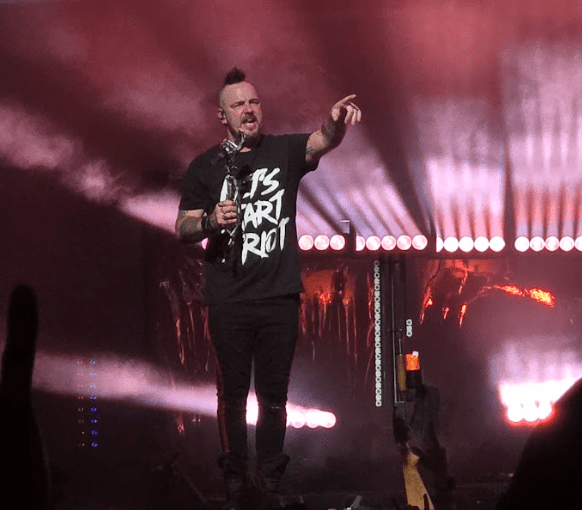
Their Seattle show started with LL Cool J’s “Mama Said Knock You Out” blasting as the band walked in alongside the Kraken mascot in gold hooded fighter robes. The setlist blended early 2000s hits that made Three Days Grace a household name, a few singles from Matt Walst’s era, and songs from the new album.
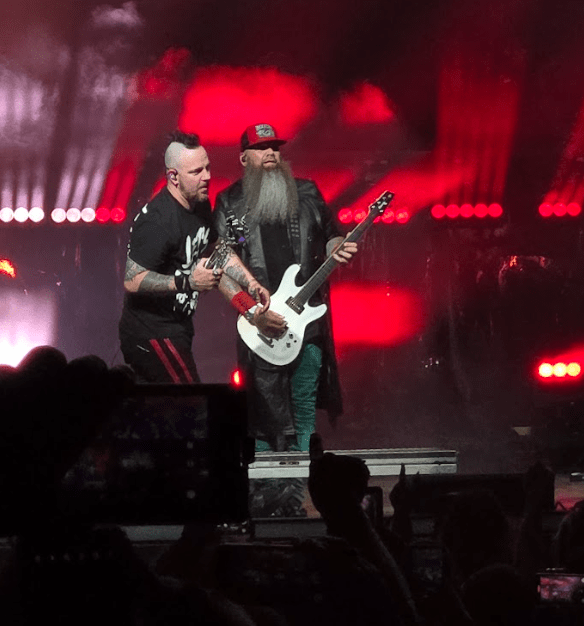
Adam and Matt took the lead for their respective eras, but both men belted out every song, giving dynamic and explosive renditions that made me wish they’d re-record all the old albums. Barry Stock delivered some classic guitar solos, while Brad Walst on bass (Matt’s older brother) and Neil Sanderson on drums drove the catchiest moments of the night. I’ve name-dropped everyone—they all did their job and sounded great. Cool. Now… what was the show actually like?
Adam and Matt alternated introducing songs, usually mixing nostalgia with dad-esque puns. Adam teed up “The Mountain” with a nod to hiking in Seattle and thanked Matt for helping Three Days Grace keep climbing in his absence. “I Hate Everything About You” followed “Kill Me Fast” and was introduced as, “We just played you our newest song—now how about our oldest one?”

The screen behind them showed scenes from their music videos, and the lights flashed along with the music as you’d expect. There was a formula to the show—carefully choreographed to exactly what you might see in a Hollywood movie. (Shows are always choreographed and time-stamped, but some bands hide it better than others.) The Kraken mascot came out for “Riot,” making a hilarious attempt (and failure) to crowd surf, which was probably not planned.
It might sound like I wasn’t jumping up and down, screaming every lyric at the top of my lungs for the 75+ minute set and having the time of my life—but that was the magic. The music didn’t need anything else. Adam and Matt’s stage presence ignited the crowd, and the energy of those 18,000 people made the show anything but formulaic.
Now… for some contrast.
Bring Me The Horizon Concert Review
I’d seen videos of previous BMTH tour intros—with simulated computer voices, video game elements, and all the special effects—so I expected something creative. I was not prepared.
The show starts with an animated woman speaking to the crowd: hints of zombies, energy harvesting, camera shots of the audience with real-time live effects and numbers popping up like futuristic CIA tech, and a strong aura of impending doom. Our evil host announces something about worship, and the curtain over the stage drops before whooshing up into the darkness. BMTH’s intro song crashes through the venue as a massive, red velvet–curtained stage is revealed—complete with three-story stained glass gothic windows and a flurry of lights and lasers.
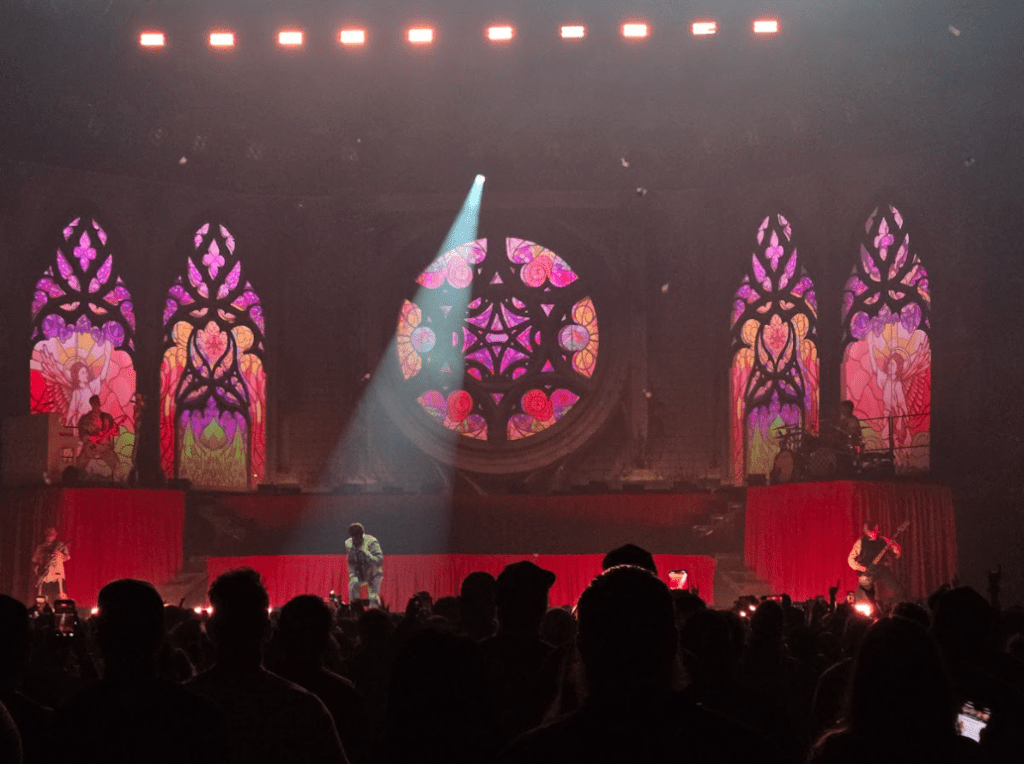
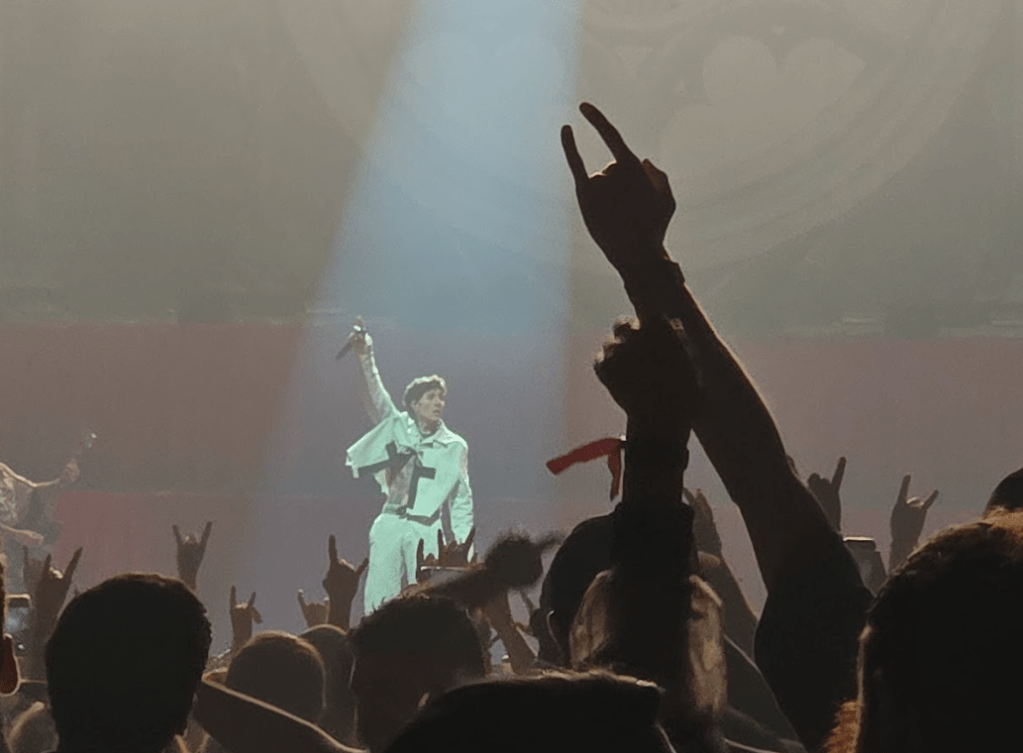
Ollie Sykes appears in flared white pants and tousled pop-star curls, screaming at octaves I didn’t know existed. The camera work adds to the frenzy, cutting between angles with effects modifying the shots in real time.
As the show continues, the visuals evolve: Ollie looks like he’s melting, his bones showing through, his energy growing desperate and manic. The evil animated girl returns, joined by a scientist—there’s a breach, containment is broken, and an experiment is coming for us. The stage shakes as a giant bald demon-angel woman smashes her fist through the cathedral walls (revealing that it was, in fact, all very good LED design).

The band plays another song with full, frantic energy. The crowd cheers. The demon-angel flails as she’s beaten by the music, before collapsing, broken and bleeding. The stage shifts to a frozen tundra, and the show continues—every moment as meticulously programmed as the last.
Ollie put on a show I never thought I’d experience in my lifetime. I couldn’t tell you a single detail about anyone else on that stage because he commanded it. His hips gave us pop star; his camera eye contact hinted at cheeky heartthrob—until he hunched over his mic to scream and give voice to every ounce of angst anyone has ever felt. He knew exactly where to be on stage at every moment, his energy perfectly synced to the story unfolding with every effect.
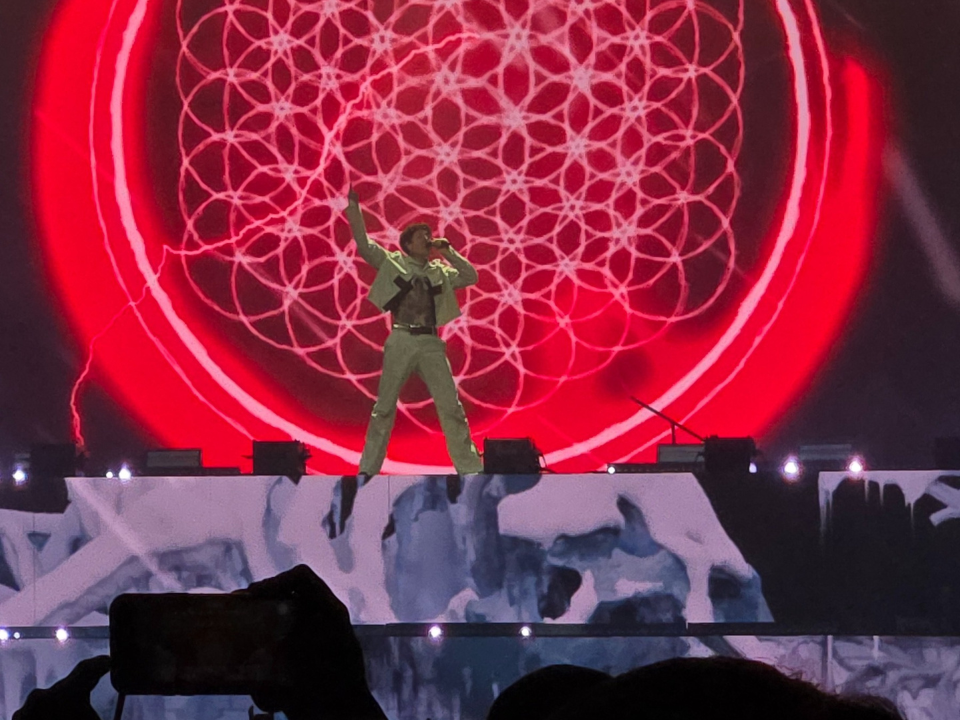
So yes, this show was just as choreographed—but in a completely different way. I was entranced and immediately converted, but only as a live fan. I still don’t see myself listening to their music, which is rare. Usually, a phenomenal show turns me into a superfan, but apparently, no amount of demon-angel babies shaking a stage can change my mind.
Evolve or Fade Away: What is the Fate of a Legacy Band?
That brings me to why I wanted to share this experience: the concept of evolve or be left behind is always pushed at us. The world changes, tastes evolve, technology improves—and we’re told to keep up or be forgotten.
Will Three Days Grace fade away with their “run-of-the-mill” shows? Is Bring Me The Horizon the new standard—or are they doomed to constantly chase new gimmicks, always at risk of not evolving fast enough?
Here’s the thing: art is meant to be experienced and enjoyed. It doesn’t have to measure up to a standard or be something it isn’t. The point is to immerse yourself. Both Three Days Grace and Bring Me The Horizon built experiences that made every fan forget everything outside that stage for a moment—to be part of something bigger. Whether that happens through a dad-joke intro and a classic riff or a massive LED cathedral and demon-angel theatrics, the result is the same.
Nothing about these shows is “run-of-the-mill” or a “new gimmick.” They just exist as art.
Art doesn’t need to hit a quota. Art doesn’t have a manager over its shoulder. Art isn’t beholden to anyone. It exists freely—waiting to be found by someone who finds meaning in it. Art endures when it’s honest, not when it chases trends.
As long as both of these bands continue to embrace who they are, they’ll never fade away. And they have a fan in me for life.
Special thanks to the Motionless in White, Three Days Grace, and Breaking Benjamin teams for being so kind as to add me to the guest list for all of these shows.

Leave a comment